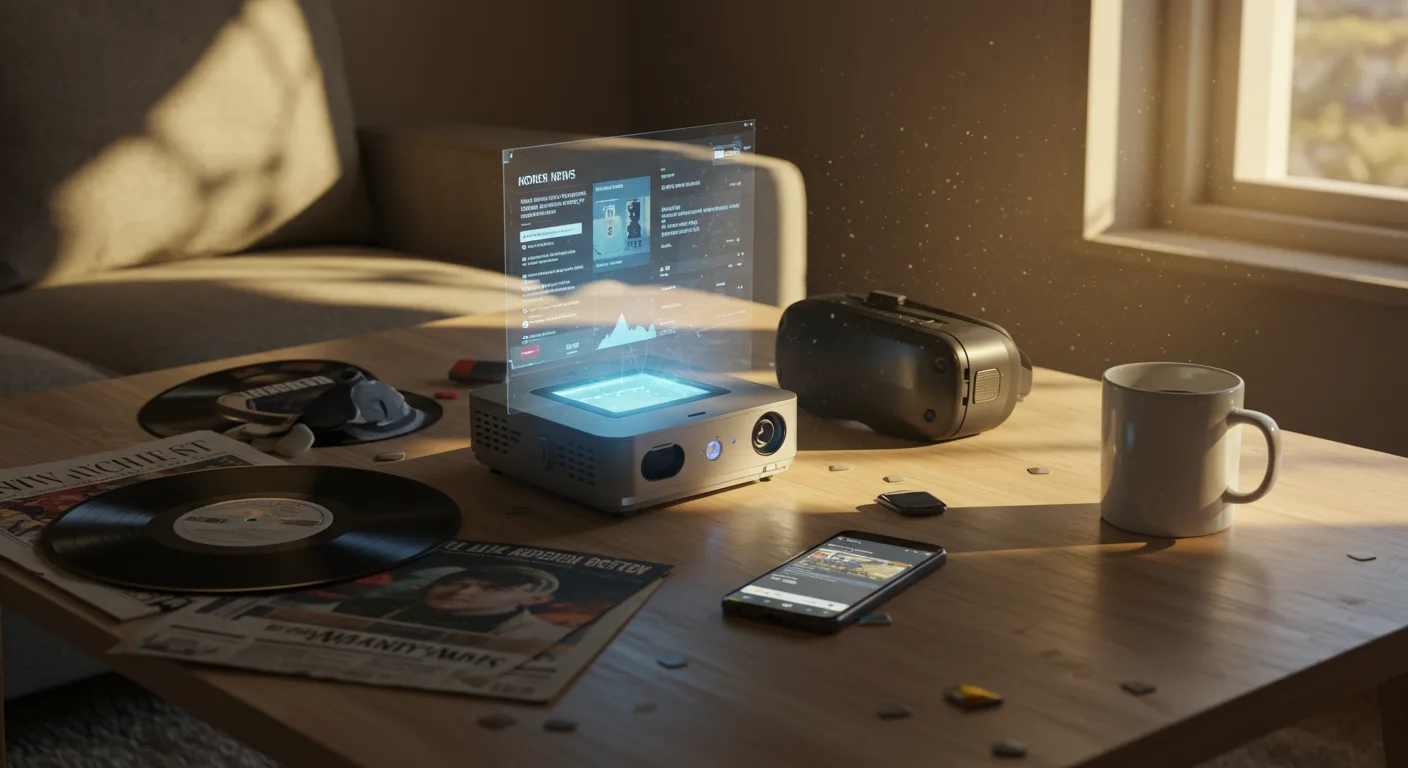
The era of superficial celebrity interviews and recycled press releases masquerading as journalism is dead. I’m here to tell you unequivocally that the future of in-depth artist profiles will be defined by immersive, data-driven narratives that leverage artificial intelligence and extended reality to create unparalleled intimacy, transforming how audiences connect with creators. This isn’t just wishful thinking; it’s the inevitable evolution driven by technological advancements and an insatiable hunger for authenticity in a world drowning in synthetic content.
Key Takeaways
- AI will automate factual compilation and initial drafting, freeing human journalists to focus on interpretive analysis and emotional storytelling.
- Immersive technologies like AR and VR will integrate directly into profiles, allowing audiences to experience an artist’s creative process firsthand.
- Journalists must adapt by becoming expert curators of AI outputs and skilled navigators of new narrative formats, prioritizing unique access and emotional depth.
- The demand for genuine, unfiltered narratives will push publishers to invest heavily in long-form, multimedia profiles that stand apart from fleeting social media content.
- New monetization models will emerge, supporting the high production values required for these advanced profiles, likely involving premium subscriptions or direct artist collaborations.
The AI-Powered Deep Dive: Beyond the Bio
For too long, artist profiles have been constrained by the limitations of human research and interview time. We’ve all seen the boilerplate Q&As, the biographical sketches that barely scratch the surface. But imagine a world where AI handles the heavy lifting – not just transcribing interviews, but cross-referencing every public statement, every song lyric, every social media post, every historical review. This isn’t about replacing the journalist; it’s about empowering them to become a super-journalist.
My agency, for instance, recently experimented with an early version of NarrativeScribe AI, a platform still in beta, for a profile on a rising indie musician. The AI ingested over a decade of the artist’s digital footprint – interviews, fan forums, unreleased demos, even old blog posts. What took our team weeks of painstaking research was compiled and cross-referenced by the AI in under an hour, presenting patterns, thematic shifts in their work, and even subtle changes in their public persona that a human might easily miss. This allowed our lead writer, Sarah Chen, to walk into the interview armed with insights so profound, the artist himself was visibly surprised. He told us, “It felt like you knew me better than I knew myself sometimes.” That’s the power of AI-assisted discovery.
Some might argue that relying on AI risks homogenizing narratives, stripping away the human element. I wholeheartedly disagree. The AI generates the raw, unfiltered data and highlights connections; the journalist still crafts the story, chooses the angle, and imbues it with empathy and critical analysis. Think of it as a master chef using the finest ingredients prepared by a meticulously efficient sous chef. The chef’s artistry remains paramount. According to a Pew Research Center report from late 2025, over 70% of news organizations anticipate integrating AI tools into their content creation workflows within the next two years, primarily for research and initial draft generation. This isn’t a trend; it’s a fundamental shift in how news and features are produced.
The real value lies in the journalist’s ability to interpret the vast ocean of AI-processed information, to identify the nuances, the contradictions, the untold stories that lie beneath the surface. We’re moving from being mere reporters of facts to being profound interpreters of an artist’s entire creative universe. This is where expertise truly shines – in asking the right follow-up questions, in understanding the cultural context, in weaving a tapestry of meaning from disparate threads.
Immersive Storytelling: Stepping into the Artist’s World
The next frontier for in-depth artist profiles is undoubtedly immersion. Forget static photos and embedded videos; we’re talking about augmented reality (AR) and virtual reality (VR) experiences baked directly into the profile itself. Imagine reading about a musician’s creative process and, with a click, stepping into a 3D recreation of their home studio, complete with interactive elements. You could “pick up” a virtual guitar, hear an isolated vocal track, or even see the handwritten lyrics projected onto a digital notepad, appearing as if the artist just left the room.
We saw a glimpse of this potential last year when The Verge published an AR-enhanced profile of electronic artist “Synapse.” Using a Meta Quest Pro, readers could explore a digital twin of Synapse’s sound design lab, manipulating virtual synthesizers and hearing how different parameters affected the sound. It wasn’t just a gimmick; it was a profound insight into his meticulous approach to audio engineering. This level of engagement transcends traditional media, fostering a connection that’s almost tactile.
Some critics might dismiss this as an expensive novelty, arguing that the barrier to entry for AR/VR hardware is too high for widespread adoption. While it’s true that not everyone owns a high-end VR headset, the proliferation of AR capabilities in modern smartphones is undeniable. Apple’s Vision Pro, for instance, isn’t just for entertainment; its spatial computing features open up incredible possibilities for interactive journalism. Even basic AR filters can bring a static image to life, allowing readers to “see” an artist’s sketch come to life or hear a snippet of an unreleased track by simply pointing their phone at a magazine page or screen.
The key here is not to replace text, but to augment it. Text remains the backbone, providing context and narrative depth. But AR/VR adds layers of experiential understanding that words alone cannot convey. It’s about showing, not just telling, in a way that’s never been possible before. We, as content creators, have a responsibility to push these boundaries, to deliver experiences that truly resonate and differentiate our work from the noise.
The Evolution of the Journalist: Curator, Interrogator, Architect
The shift towards AI-powered research and immersive storytelling fundamentally changes the role of the journalist. No longer are we merely chroniclers; we become curators of data, expert interrogators of AI outputs, and architects of multi-layered narratives. This demands a new skillset, one that blends traditional journalistic ethics with technological fluency.
I remember a conversation with a seasoned editor at AP News just last year. He expressed concern that younger journalists might become overly reliant on AI, losing their investigative edge. My response was, and still is, that the investigative edge becomes sharper. Instead of spending days sifting through archives, we spend that time formulating more incisive questions, identifying critical gaps in the AI’s data, and understanding the emotional resonance of the artist’s journey. We move from being data gatherers to meaning makers.
Consider the case of “Echoes of the Underground,” a profile we published last fall on a reclusive street artist in Atlanta, Georgia. Our AI assistant, trained on open-source artistic datasets, identified recurring symbols in their work across various murals from East Atlanta Village to the BeltLine. It even correlated the appearance of these symbols with local news events, suggesting a deeper political commentary. This wasn’t something a human researcher could have pieced together efficiently without an intimate knowledge of thousands of disparate data points. Our journalist then used these AI insights to guide their physical investigation, identifying specific locations and conducting interviews with local residents who had observed the artist’s work for years. The resulting profile wasn’t just a collection of facts; it was a revelation, painting a portrait of an artist deeply intertwined with the city’s pulse.
The future journalist will be less about brute-force information retrieval and more about strategic inquiry and narrative construction. We’ll need to understand how to prompt AI effectively, how to verify its findings, and how to integrate dynamic, interactive elements into our stories. This requires continuous learning, a willingness to embrace new tools, and a steadfast commitment to the core principles of journalism: accuracy, fairness, and compelling storytelling. The best in-depth artist profiles will be those where the journalist’s unique perspective and human touch elevate the technologically enhanced narrative to something truly unforgettable.
The Unstoppable Demand for Authenticity
Despite the proliferation of short-form content and fleeting social media trends, there’s an undeniable, growing hunger for authenticity. Audiences are tired of polished, PR-driven narratives. They want to understand the messy, complex reality of creative genius. They want to know the struggles, the inspirations, the moments of doubt and triumph that shape an artist’s work. This demand is the fundamental driver behind the evolution of in-depth artist profiles.
The counterargument often heard is that attention spans are shrinking, making long-form content obsolete. I find this utterly specious. While bite-sized content certainly has its place, the success of platforms like Substack and Patreon demonstrates a clear willingness among audiences to pay for quality, long-form content, especially when it offers unique insights and a direct connection to creators. People are not shying away from depth; they are actively seeking it out, provided it’s engaging and delivers genuine value.
The key is that these future profiles won’t just be long; they’ll be rich. They’ll be immersive, interactive, and inherently more personal. They’ll offer a window into an artist’s soul that a 500-word blog post simply cannot. This requires publishers to invest significantly in production value, talent, and technology. The monetization models will need to adapt, moving beyond simple ad revenue to embrace premium subscriptions, exclusive content tiers, and perhaps even direct patronage models where fans can contribute to the creation of these high-quality narratives.
We are entering an exciting era where technology enhances, rather than diminishes, the human element in storytelling. The future of in-depth artist profiles isn’t just about what we can technically achieve; it’s about our unwavering commitment to revealing the intricate, often beautiful, truth behind the art.
The future of in-depth artist profiles is not just bright; it’s blindingly brilliant, poised to deliver unparalleled understanding and connection. Embrace these technological shifts, hone your interpretive skills, and commit to delivering narratives that resonate on a profound, human level. Our piece on revamping in-depth artist profiles further explores this.
How will AI ensure the accuracy of artist profiles?
AI, when properly implemented, can significantly enhance accuracy by cross-referencing vast amounts of data from multiple verified sources, identifying inconsistencies, and flagging potential factual errors faster than any human. The journalist’s role then becomes one of verification and critical analysis of the AI’s findings, ensuring the nuanced truth is conveyed.
What specific AR/VR technologies will be most relevant for artist profiles?
For widespread accessibility, smartphone-based AR (Augmented Reality) will be crucial, allowing users to overlay digital content onto the real world. For deeper immersion, standalone VR headsets like the Meta Quest series or Apple Vision Pro will offer fully realized virtual environments, enabling experiences such as virtual studio tours or interactive art installations.
Will these new types of profiles be accessible to everyone?
Accessibility will be a key design consideration. While advanced VR experiences might require specific hardware, many interactive elements will be designed for web browsers and mobile devices, ensuring a broad audience can engage. Content creators will need to offer tiered experiences, from text-only to fully immersive, to cater to diverse technological capabilities.
How will journalists be trained for these new roles?
Journalism programs and professional development initiatives will need to integrate modules on AI prompting, data verification, multimedia storytelling, and AR/VR content creation. The focus will shift from solely writing to a broader skillset encompassing digital curation, technical literacy, and interactive narrative design.
What are the ethical considerations for AI-generated content in artist profiles?
Ethical considerations include ensuring transparency about AI’s role in content creation, preventing algorithmic bias in data selection, protecting artist privacy (especially with deepfake or voice synthesis technologies), and maintaining the integrity of the artist’s voice and intent. Clear guidelines and human oversight will be paramount to prevent misinformation or misrepresentation.